

Sleep is the best meditation – Dalai Lama
A night of sleep loss here and there is normal. Excitement about the big trip ,a great idea popping up in the mind, little anxiety about a big presentation causes sleepless nights but we do not call it insomnia.
Chronic Insomnia is a condition when a person cannot sleep satisfactorily for three or more days in a week for 3 continuous months.
Insomnia can affect a person in three ways
1. Falling asleep
2. Staying asleep
3. Waking up too early
SOME FACTS ABOUT INSOMNIA
1. 30% to 35% of adult population have suffered brief episode of insomnia.
2. 15% to 20% of the population have suffered short periods of insomnia- less than 3 months
3. 10% of general population suffer from chronic insomnia- more than 3 months
4. 6o% of women will have symptoms of insomnia around menopause
5. 26% of menopausal women experience severe symptoms of in insomnia
INSOMNIA AND ASSOCIATED MEDICAL AND PSYCHOLOGICAL CONDITIONS
MENOPAUSE
Approximately 61% women post -menopause experience episodes of insomnia. During menopause ovaries produce less of oestrogen and progesterone. Progesterone is sleep producing hormone hence low level of progesterone causes sleep difficulties. Hot flashes are experienced by 80% of women in transitional period.There is sudden surge of adrenaline a chemical responsible for fight or flight response which causes insomnia.
EMOTIONAL AND PHYSICAL ABUSE
A victim of abuse finds it more difficult to sleep. The stress hormone released causes muscle tension ,GIT upset and negative thinking about oneself and life in general. This causes hyperarousal and hence insomnia.
ABUSE DURING CHILDHOOD
A child who suffers from abuse or watches abuse may suffer from post traumatic stress disorder .He or she may become hypervigilant to the surroundings which causes sleep loss in adulthood also.
DISCRIMINATION INDUCED STRESS
Discrimination at home- girl child and women may be discriminated against in some households
Discrimination at school- a child may be bullied or discriminated against because of different social background
Discrimination at workplace- a person may be discriminated at workplace due to racial background
GRIEF DUE TO LOSS
It is difficult to sleep during bereavement. Continous loneliness ,sadness, anxiety, regrets and distressing thoughts about loved one leads to complicated or prolonged grief.
ALCOHOL
20% of the population may take alcohol to help them sleep. It may give occasional relief but it prevents the person from reaching the deep sleep or REM sleep.When the person wakes up they don’t feel rested and may suffer from headache low energy levels and low mood.
CAFFEINE
Caffeine found in coffee and tea is a stimulant. It has a Half Life of 6 to 7 hours.Even after 7 hrs caffeine is present in the blood circulation.
SMOKING
Nicotine is a stimulant.Smoking cigerette and chewing tobacco products may result in sleep difficulties.
POST TRAUMATIC STRESS DISORDER
Army veterans ,rape survivors, victims of severe abuse suffer from loss of restorative Deep sleep and REM sleep . They suffer severe nightmares and relive the moment through flashbacks.
DEPRESSION
Insomnia and Depression go hand in hand. In a person with chronic insomnia lack of rest which is required for body’s natural regeneration causes Increased risk of depression.Deep sleep produces Growth hormone.Lack of this essential hormone effects proper brain functions and loss of motivation.
ANXIETY
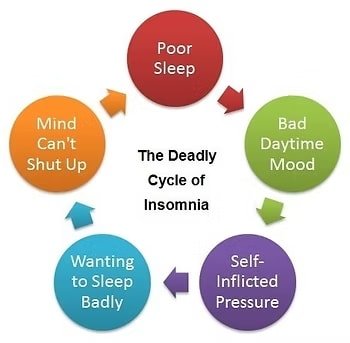
When people can’t sleep they become anxious about not being able to sleep.Anxiety induced Increase in stress hormone -adrenaline and cortisol increases hypervigilance and hyperarousal.
SCREEN TIME
Electronic devices emit an artificial blue light that interferes with our body’s natural internal clock.Too much screen time suppresses the release of body’s sleep hormone melatonin. This causes delayed sleep cycle in teenagers and young adults.
OLD AGE
As a person ages less of Growth hormone and less of melatonin is produced.This causes loss of relaxing Deep sleep.
HEAVY MEALS
Consuming heavy meals just before bedtime can lead to gastroesophageal reflux causing heartburn and consequently sleep loss.
MEDICAL CONDITIONS
Medical conditions such as Diabetes, Hyperthyroidism, Hypertension, Hysterectomy, Obesity, Chronic pain as in Arthritis and Injury can effect sleep.
How to fight Insomnia
Exercise
Exercise increases Deep sleep where the brain and body rejuvenates itself.
Maintain a Sleep Schedule
Going to sleep and waking up at a specific time is essential .It helps to regulate the internal body clock. Going for morning walk will help maintain the circadian rhythm.
Associate Bed With Sleep
If you can’t sleep after half an hour of going to bed get up and go to another room -read a book or listen to relaxing music .Bed should not be associated with anxiety of not being able to sleep.
Relaxation Exercise
Meditation Guided Imagery and taking long deep Breaths will help you relax.
Food That Can Help You Sleep
A cup of hot milk contains calcium which helps in production of sleep hormones tryptophan and melatonin.
Bananas-Potassium and magnesium in bananas are considered natural sedatives.
Maintaining a Cool Bedroom Temperature
During deep sleep the temperature of the body drops so maintaining optimal temperature will help you attain deep sleep.
Healthy Conversation
A good talk with a trusted friend about the way out of any problem will help in easing anxiety.
Journaling your thoughts
Writing down positive and negative thoughts in a diary will help identify the reason for anxiousness.
Keep a Pet
Hugging and playing with a pet will drop symptoms of anxiety by half.
Help of a Mental Health Professional
Simple instructions of changing the way you think about your difficulties can lead to healthy sleep. Unlearning the negative social traits caused by anxiety will help you relax .
Visit a Doctor
If nothing works take the help of a doctor who can treat the underlying medical and psychological problem.